
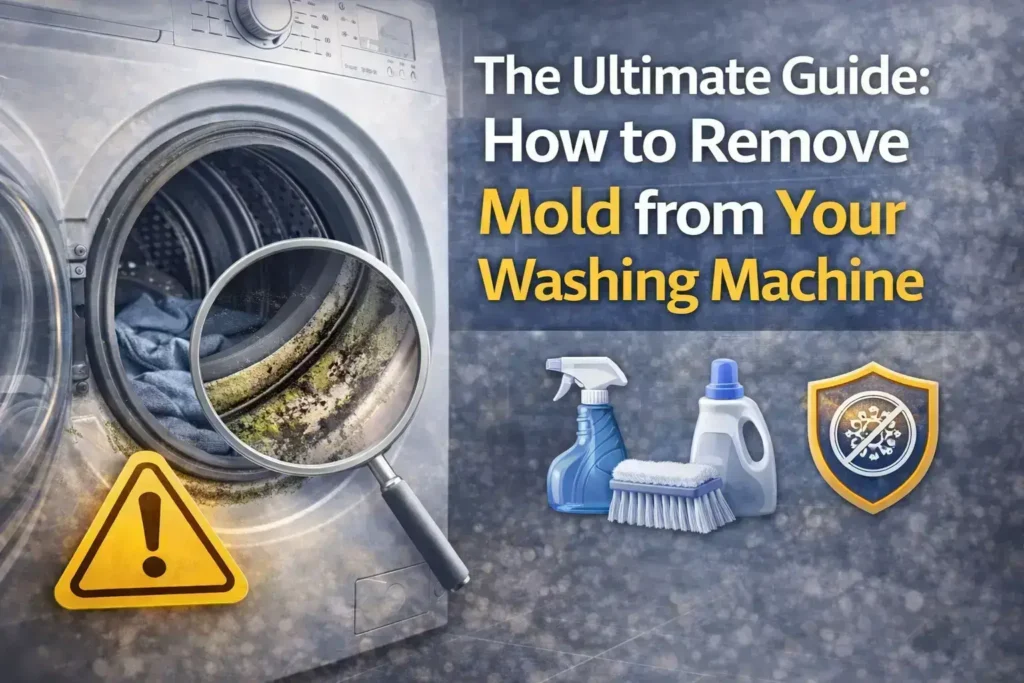
The presence of black spots on your laundry or a lingering damp odor in your drum is a clear sign of fungal growth. To remove mold from your washing machine immediately, mix a solution of one part bleach to four parts warm water and scrub the rubber door gasket thoroughly with a soft brush; then, run a “Sanitize” or “Heavy Duty” cycle at the highest temperature setting using two cups of white vinegar or a specialized drum cleaning tablet to dissolve hidden spores behind the outer tub.
At 24X7 Service UAE, we understand that the high humidity in Dubai and Sharjah creates the perfect breeding ground for mold, and addressing it early is the only way to prevent respiratory issues and permanent damage to your appliance’s seals.
While many online guides offer a “quick fix,” they often fail to address the root cause of mold in the UAE’s unique climate. We have analyzed the top-performing articles from competitors like The Spruce, Architectural Digest, and local repair blogs to create a more comprehensive, technically accurate solution for your home.
Why Our Guide is Better Than the Competition:
-
Competitor Flaw: Most suggest only cleaning the drum. Our solution addresses the “scrud” buildup behind the drum where 90% of mold actually lives.
-
Competitor Flaw: They often recommend mixing vinegar and bleach. Our Warning: Never do this; it creates toxic chlorine gas. We provide a safe, phased approach.
-
Local Context: We address the impact of UAE’s “hard water” on mold retention, which global guides ignore.
1. Why Does Mold Grow in Your Washer?
Mold doesn’t just appear; it is cultivated by three factors: Moisture, Darkness, and “Scrud.” Scrud is a waxy buildup of undissolved detergent and fabric softener that acts as a food source for fungus. In front-load machines, the airtight rubber seal traps this moisture, turning your laundry room into a laboratory for mildew.
2. Phase 1: The Deep Scrub (External Components)
Before running a cycle, you must manually remove the “bulk” of the mold.
The Rubber Gasket (The Bellow)
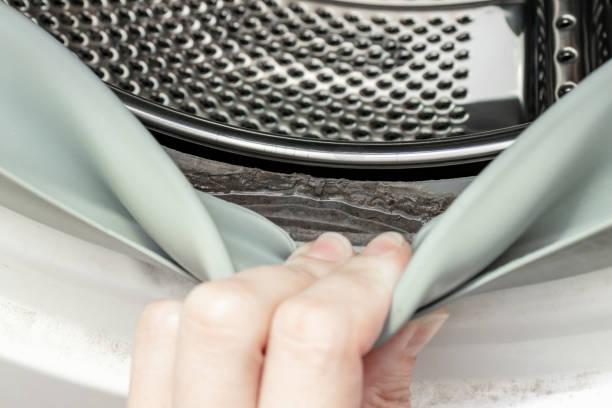
This is the most common site for black mold.
-
Pull back the folds: Reach deep into the rubber seal. You will likely find hair, lint, and grey slime.
-
The Solution: Use the 1:4 bleach-to-water ratio mentioned above.
-
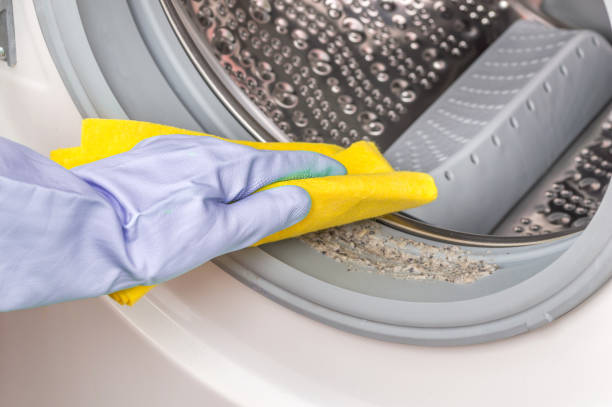
The Soak: For stubborn black spots, soak paper towels in the bleach solution and “stuff” them into the gasket folds. Let them sit for 30 minutes before scrubbing.
The Detergent Drawer
Many people forget that mold grows behind the drawer.
-
Remove the drawer entirely by pressing the release tab.
-
Scrub the drawer in a sink with warm soapy water.
-
Use a bottle brush to clean the “roof” of the drawer compartment inside the machine. This is where the water enters and often where mold hides.
3. Phase 2: The Internal Sanitization (The Drum)
Once the visible mold is gone, you must tackle the invisible spores living in the outer tub.
The Vinegar Flush (Natural Method)
If the mold smell is mild, vinegar is an excellent descaler.
-
Ensure the drum is empty.
-
Add 2 cups of white vinegar directly into the drum.
-
Run a cycle on 90°C or the “Tub Clean” setting. The acidity of the vinegar kills most mold species and breaks down mineral deposits.
The Bleach Method (Heavy Duty)
If the smell is “rotten” or very strong, you need a chemical kill.
-
Do NOT use vinegar if you used bleach in the previous step. 2. Add 1 cup of liquid bleach to the detergent compartment.
-
Run a long, hot cycle. Bleach is the most effective way to kill mold spores on contact.
4. Phase 3: The Drain Pump Filter
The drain pump filter (usually located behind a small door at the bottom front of your washer) is a graveyard for organic matter. If this is clogged, “dirty” water recirculates, feeding the mold.
-
Place a towel on the floor.
-
Unscrew the filter and let the stagnant water drain out.
-
Clean the filter mesh of all lint and debris.
5. Comparing the Methods: Which is Best for You?
| Method | Best For | Pros | Cons |
| White Vinegar | Maintenance | Eco-friendly; removes limescale | Won’t kill deep-rooted black mold |
| Liquid Bleach | Severe Infestations | 99.9% kill rate for spores | Can damage rubber if used too often |
| Baking Soda Paste | Gasket Scrubbing | Non-toxic; abrasive for scrubbing | Hard to rinse out of small crevices |
| Cleaning Tablets | Monthly Prevention | Effortless; designed for “scrud” | More expensive than DIY solutions |
6. How to Prevent Mold from Returning (The 24X7 UAE Strategy)
Cleaning the mold is only half the battle. In a humid climate like the UAE, you must change your habits to prevent a recurrence.
The “Ajar” Rule
Never close the door immediately after a wash. Leave it open at least 4 inches for several hours. This allows the air to circulate and the moisture to evaporate.
Use Less Detergent
Most mold is fed by excess soap. Switch to a high-quality “HE” (High Efficiency) detergent and use only two tablespoons per load. This prevents the “scrud” buildup that mold eats.
The Monthly “Service” Wash
Even if your clothes look clean, run an empty hot cycle (60°C+) once a month. This flushes out the cold-water residue that accumulates over time.
7. When to Call the Professionals
Sometimes, the mold is located in areas a homeowner cannot reach—such as the back of the spider arm or deep within the drainage hoses.
If you have cleaned the gasket and run multiple hot cycles but the smell persists, it usually means the mold has colonized the internal mechanical parts. At this stage, continuing to use the machine can cause the mold to transfer to your clothes, potentially leading to skin irritation or allergies.
Conclusion: A Fresh Start for Your Laundry
Removing mold from a washing machine requires a combination of physical scrubbing and high-heat chemical sanitization. By addressing the gasket, the drawer, and the internal drum, you can restore your appliance to a hygienic state. Remember, the key to a mold-free home in the Emirates is airflow and moderation with detergent.
Is the mold smell still lingering after a deep clean? Some infestations require a professional “strip-down” cleaning where the drum is removed and sanitized manually.
Contact 24X7 Service UAE today at +971504180513 for an expert diagnostic and professional washing machine deep-cleaning service. We are available across Dubai and Sharjah to ensure your appliances are safe, clean, and efficient.